Capacity Building
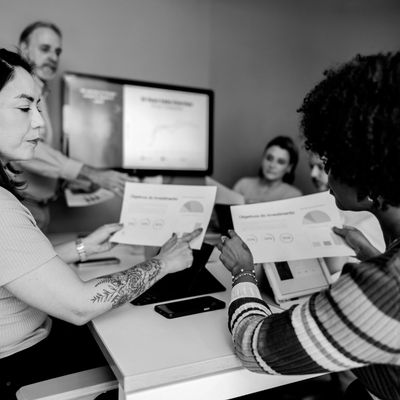
Capacity building for Food Decision Engineering
Build the people, processes and institutions behind better food decisions
IFoRAC helps governments, international organizations, laboratories, academic institutions and food-system actors develop the capability to transform evidence into transparent, practical and measurable decisions.
Our programs combine applied learning, technical mentoring, decision-support tools and institutional development so that partners can progressively internalize Food Decision Engineering.
From training individuals to strengthening decision systems.
Capacity is more than technical knowledge
Food-safety capacity is often approached primarily through technical courses. Scientific skills are essential, but they do not automatically create an effective decision system.
An organization also needs the capability to:
- Identify which decisions matter most
- Formulate clear and answerable decision questions
- Connect evidence from different sources
- Select fit-for-purpose assessment methods
- Characterize and communicate uncertainty
- Compare risk-management options and trade-offs
- Translate analysis into usable decision products
- Implement and monitor decisions
- Maintain tools and analytical workflows
- Learn from results and improve future decisions
The objective is not only to train people. It is to build a lasting organizational capability for making better decisions.
Building capability at every level
Develop the knowledge and practical skills required to assess risks, interpret evidence, compare options and communicate findings.
Team capability
Enable multidisciplinary teams to work across risk assessment, surveillance, laboratories, economics, policy and implementation.
Institutional capability
Establish repeatable workflows, governance arrangements, tools and responsibilities that connect evidence to decisions.
National and regional capability
Strengthen cooperation, data exchange, technical networks and shared decision processes across institutions and countries.
The strongest programs connect all four levels rather than focusing exclusively on individual training.
Core Food Decision Engineering capabilities
Decision framing and problem formulation
Learn to define the decision, identify its owner, establish the deadline and determine what evidence and analysis are genuinely required.
Risk assessment and exposure analysis
Develop practical capability in microbiological and chemical risk assessment, dietary exposure assessment, risk ranking, risk-benefit assessment and scenario modelling.
Options and trade-off assessment
Compare expected risk reduction, residual risk, feasibility, cost, food availability, sustainability, trade and potential unintended consequences.
Decision-support products
Transform technical analysis into decision briefs, prioritization models, dashboards, interactive tools and clear recommendations.
Uncertainty and risk communication
Communicate what is known, what remains uncertain and how uncertainty should influence action without creating either false confidence or decision paralysis.
Monitoring, evaluation and learning
Define indicators, assess whether an intervention worked and use the results to improve future decisions and institutional processes.
Programs adapted to the decision context
Depending on partner needs, IFoRAC programs can include:
- Quantitative microbiological risk assessment
- Chemical and dietary exposure assessment
- Cumulative and combined-risk assessment
- Food consumption surveys and Total Diet Studies
- Risk ranking and priority setting
- Intervention and scenario modelling
- Risk-benefit and trade-off assessment
- Novel-food evidence evaluation
- Climate-sensitive food-safety risks
- Import risk management
- AI-assisted evidence mapping and data structuring
- Reproducible R, Python and Shiny workflows
- Dashboard and decision-tool development
- Codex-compatible risk-analysis governance
- Monitoring and public-health impact evaluation
Begin with the evidence and capability available today
Countries and institutions have different levels of data, expertise, infrastructure and resources. Food Decision Engineering should not be limited to highly digitalized systems.
Essential FDE
Designed for organizations with limited data or fragmented workflows.
It can include:
- Decision mapping
- Structured expert judgement
- Codex standards and international evidence
- Basic risk profiles
- Data-light prioritization
- Simple decision briefs
- Explicit tracking of uncertainty and data gaps
Purpose: Make priority decisions more transparent and identify the most valuable next capacity investments.
Enhanced FDE
Designed for organizations with moderate data and analytical capability.
It can include:
- Connected laboratory and surveillance data
- Food-consumption and occurrence data
- Dietary exposure assessment
- Risk-ranking models
- Scenario comparison
- Intervention assessment
- Interactive dashboards
Purpose: Improve prioritization, resource allocation and comparison of risk-management options.
Advanced FDE
Designed for organizations with strong data systems and established technical capability.
It can include:
- Probabilistic risk assessment
- Quantitative microbiological risk assessment
- Predictive modelling
- Whole-genome sequencing and traceability data
- AI-assisted analytical workflows
- Cost-effectiveness and trade-off models
- Adaptive monitoring and learning systems
Purpose: Build predictive, adaptive and continuously improving food decision systems.
Every organization can begin engineering better decisions with the data, institutions and capabilities it already has.
From capacity diagnosis to institutional ownership
1. Diagnose the current capability
Assess existing skills, data, workflows, tools, responsibilities and institutional constraints.
Output: FDE capacity diagnosis
2. Define priority decisions
Identify the recurring decisions that matter most for public health, resilience, innovation, trade or trust.
Output: Priority decision portfolio
3. Design the capacity pathway
Define the knowledge, methods, tools, governance and partnerships needed to improve those decisions.
Output: Capacity-development roadmap
4. Learn through application
Develop skills by working on a real hazard, food pathway, intervention or policy decision.
Output: Practical decision product
5. Transfer methods and tools
Provide reusable workflows, documentation, mentoring and training for local teams and trainers.
Output: Transferred analytical and decision capability
6. Institutionalize and evaluate
Embed responsibilities, procedures, maintenance arrangements and indicators for monitoring progress.
Output: Institutionalization and evaluation plan
Flexible formats for different needs
Executive briefings
Focused sessions for senior leaders, risk managers and decision owners on the strategic use of evidence, uncertainty and Food Decision Engineering.
Applied technical courses
Hands-on programs in risk assessment, exposure analysis, risk ranking, modelling and decision-support methods.
Decision laboratories
Facilitated sessions in which multidisciplinary teams work through a real decision using available evidence and practical FDE methods.
Embedded mentoring
Ongoing technical and strategic support while teams develop an assessment, decision brief, model or institutional workflow.
Train-the-trainer programs
Programs that enable national, regional or institutional experts to deliver and adapt FDE learning locally.
Institutional roadmaps
Structured support for moving from current capabilities toward stronger, more connected and sustainable decision systems.
Regional communities of practice
Networks that enable organizations and experts to exchange methods, tools, experiences and lessons across countries.
Capacity building should produce practical results
Whenever possible, IFoRAC uses a real decision challenge as the learning environment.
Participants may develop:
- A clearly framed decision question
- A decision portfolio map
- An evidence and data architecture
- A risk profile or risk assessment
- A priority hazard-food pathway map
- A risk-ranking model
- An intervention or scenario comparison
- A one-page decision brief
- A dashboard or interactive prototype
- An uncertainty communication product
- A monitoring and evaluation framework
- An institutional FDE roadmap
Participants should leave with more than new knowledge. They should leave with a product their organization can use.
From participation to institutional change
IFoRAC can help partners evaluate capacity development at four levels:
Knowledge and skills
Can participants apply the methods correctly and explain their limitations?
Practical application
Can teams produce a credible assessment, decision brief, model or other decision product?
Institutional use
Are the new methods and tools incorporated into recurring workflows and responsibilities?
Decision and impact
Did the strengthened capability improve prioritization, action, implementation or measurable outcomes?
This approach shifts evaluation away from attendance alone and toward demonstrated capability and institutional use.
Build capability while solving a real problem
Capacity development can be integrated into every Food Decision Mission:
Burden-to-Action: Burden interpretation, risk ranking, intervention selection and impact monitoring
Climate-Ready Food Safety: Foresight, scenario planning, early-warning indicators and adaptive surveillance
Safe Innovation Fast-Track: Problem formulation, evidence evaluation, uncertainty management and post-market monitoring
Balanced Food-System Decisions: Trade-off assessment, multi-criteria comparison and stakeholder communication
This model allows an organization to address an immediate priority while building the capability to manage similar decisions independently in the future.
Sustainable capability, not permanent dependency
IFoRAC designs capacity partnerships around local ownership, practical application and progressive transfer.
Our programs are:
- Scientifically rigorous
- Codex-compatible
- Adapted to available data and resources
- Transparent about uncertainty
- Focused on real decisions
- Designed for institutional use
- Supported by reusable tools and workflows
- Evaluated through practical results
No country or institution should be excluded from risk-informed decision-making because it does not yet have perfect data.